The most common question we get from car owners comparing protection options is simple: PPF vs. ceramic coating, which one do I actually need? They are often talked about as competitors, but they solve two different problems. Understanding the difference is the fastest way to spend your money on the protection your car actually needs.
The core difference in one line
Paint protection film is a physical barrier. Ceramic coating is a chemical barrier. PPF stops things that hit the car. A coating repels things that land on it. That single distinction drives every other comparison below.
| Paint protection film (PPF) | Ceramic coating | |
|---|---|---|
| Protects against | Rock chips, road debris, scratches, minor impacts | UV fading, chemical stains, bird droppings, water spots |
| Type of barrier | Thick urethane film | Thin bonded liquid coating |
| Self-healing | Yes, light scratches vanish with heat | No |
| Gloss and hydrophobics | Adds some | Adds a lot, strong water beading |
| Typical lifespan | 5 – 10 years | 2 – 5 years (longer for premium tiers) |
| Relative cost | Higher, especially full coverage | Lower for whole-vehicle coverage |
When PPF is the right call
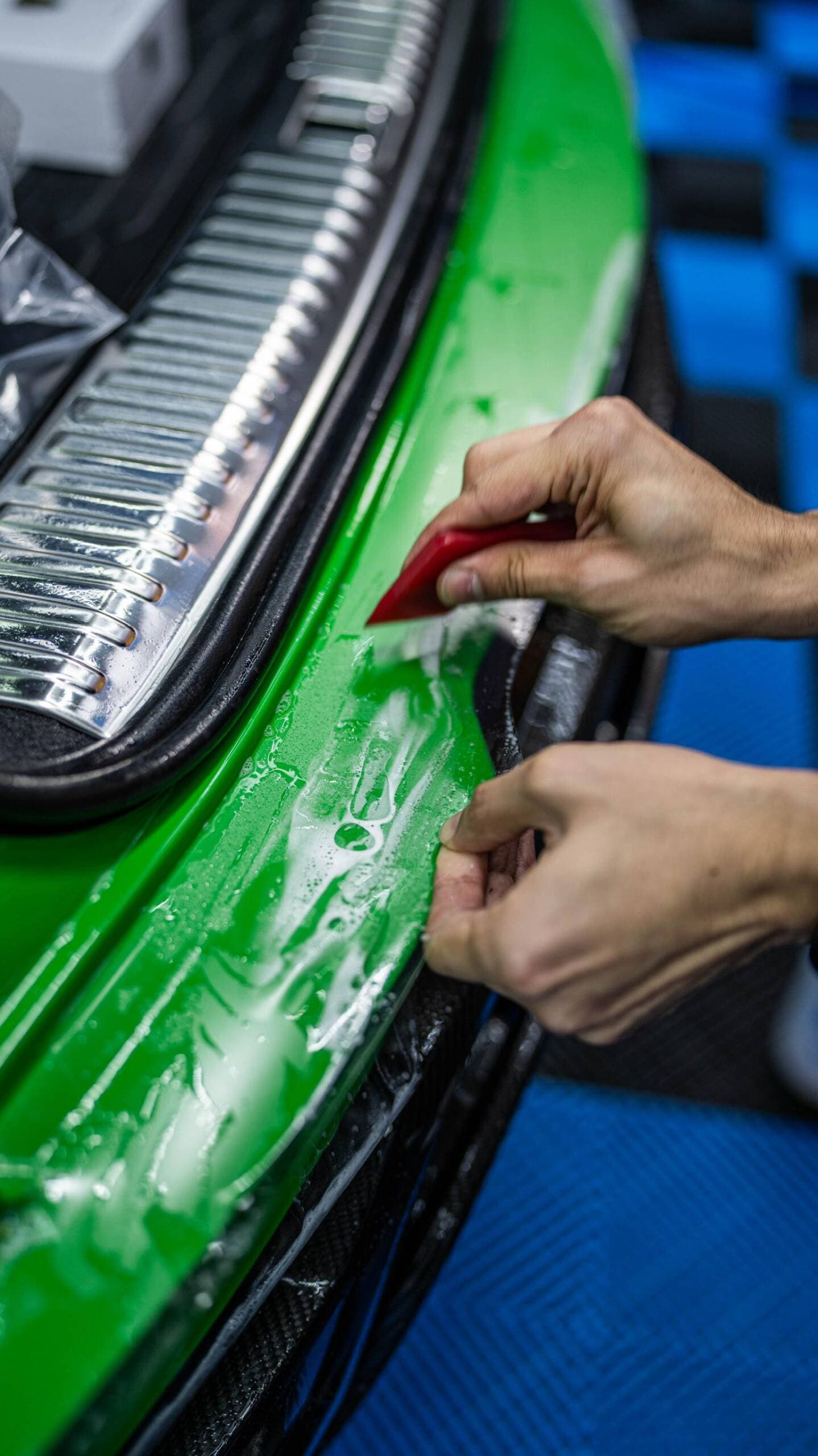
Paint protection film is the only option that stops physical damage. If your concern is rock chips on the highway, road debris, or scratches on high-impact panels like the hood, bumper, fenders, and mirrors, film is what you want. It also self-heals light surface scratches when warmed by the sun. New cars, leased vehicles you want to hand back flawless, and any car that sees highway miles benefit most.
When ceramic coating is the right call
A ceramic coating shines for everyday commuting and appearance. It resists UV fading, makes bird droppings and sap easier to remove before they etch, adds deep gloss, and makes the whole car far easier to wash. It also covers areas film usually does not, like wheels, trim, and glass. For an owner who wants an easy-clean, great-looking finish rather than armor against rock chips, coating alone is often enough.
The answer most enthusiasts land on: both
PPF and ceramic coating are not rivals. The strongest setup puts film on the high-impact front panels to take the chips, then a coating over the entire car, including the film, so everything shares the same slick, hydrophobic, UV-resistant surface. You get physical and chemical protection at once, and the whole vehicle cleans up the same way. We break the layering order down in our guide on why ceramic coating goes over PPF.
Which should you choose?
A quick way to decide: if you fear rock chips and physical damage, start with film. If you want easy maintenance and gloss, start with coating. If you want the car protected for the long haul, do both. We will look at how you drive and what you want to protect, then recommend the combination that fits your budget. Request a quote from our Dublin shop, serving Columbus and central Ohio.
FAQ
Is PPF better than ceramic coating?
Neither is better overall. PPF protects against physical damage like rock chips. Ceramic coating protects against chemical and UV damage and adds gloss. They address different threats.
Can you put ceramic coating over PPF?
Yes. Coating the film adds hydrophobics and makes the film easier to clean and last longer. It is a common and recommended combination.
Which lasts longer, PPF or ceramic coating?
PPF generally lasts five to ten years. Ceramic coatings last two to five years, with premium tiers going longer.
Do I need both PPF and ceramic coating?
Not necessarily, but together they give the most complete protection: film for impacts on the front end, coating for UV, stains, and easy cleaning everywhere.